.svg)


About Us
TNEA Counselling Code 2725 | For Admission : +91-75987 41852
.svg)


.svg)

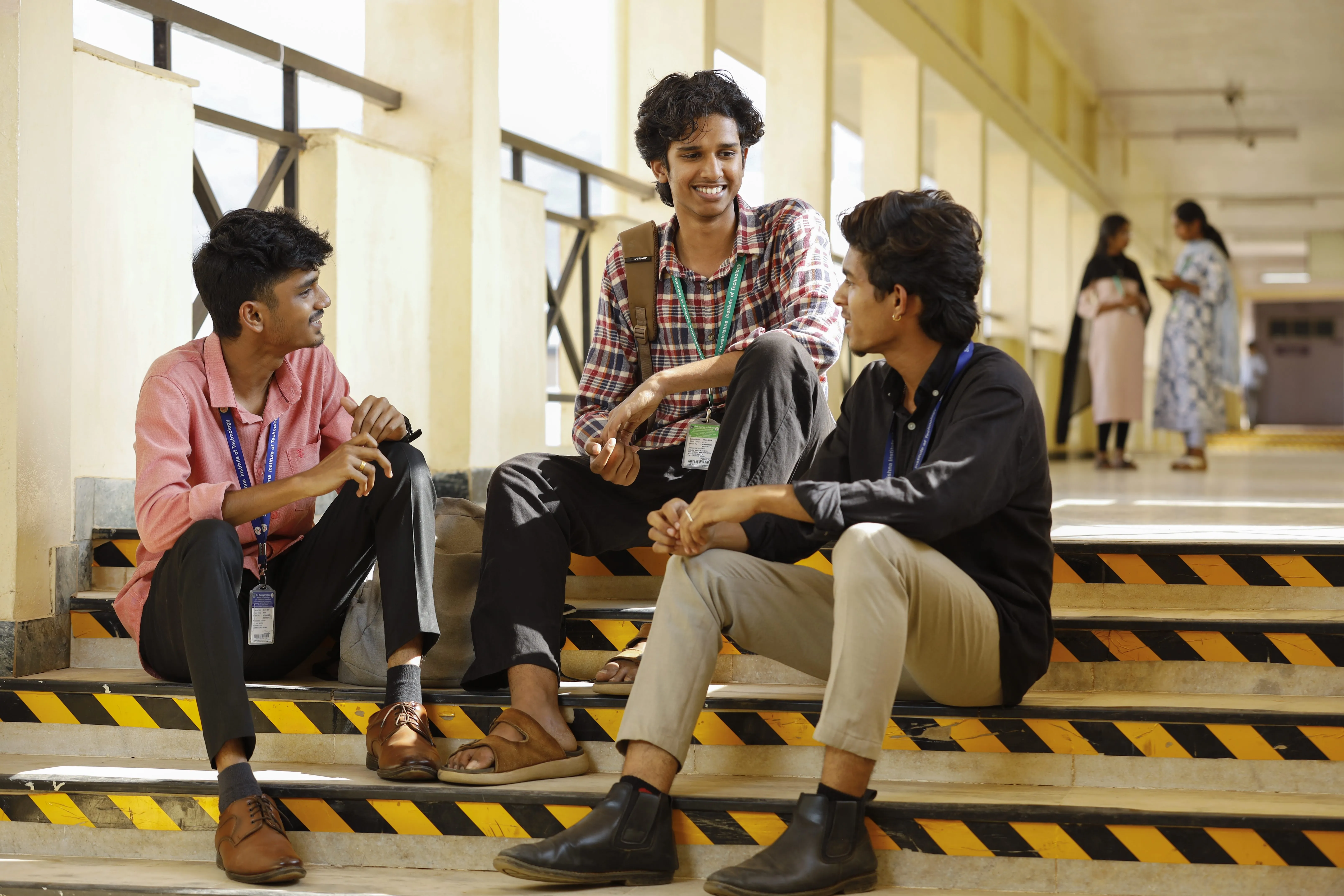
The Department of Artificial Intelligence and Data Science was established in 2025. The department follows an Outcome-Based Education (OBE) curriculum designed to meet the evolving demands of Artificial Intelligence, Data Science, and emerging technologies. It is equipped with modern infrastructure, smart classrooms, high-speed internet connectivity, and well-equipped laboratories, providing students with a strong foundation in AI, Machine Learning, and Data Analytics. The department aims to nurture skilled professionals through quality education, innovation, and industry-oriented learning.
.webp)
Graduates will demonstrate strong technical and domain knowledge in Artificial Intelligence and Data Science to analyze and solve complex engineering problems and contribute effectively in industry and higher education.
Graduates will engage in innovation, research, and entrepreneurship, and pursue lifelong learning to adapt to emerging technologies and support sustainable development.
Graduates will exhibit ethical values, leadership, teamwork, and social responsibility for the betterment of society.
Apply the knowledge of mathematics, science,engineering fundamentals, and an engineering specialisation for the solution of complex engineering problems.
Identify, formulate, research literature, and analyse complex engineering problems reaching substantiated conclusions using first principles of mathematics, natural sciences, and engineering sciences.
Design solutions for complex engineering problems and design system components or processes that meet the specified needs with appropriate consideration for public health and safety, and cultural, societal, and environmental considerations.

Use research-based knowledge and research methods including design of experiments, analysis and interpretation of data, and synthesis of the information to provide valid conclusions.
Create, select, and apply appropriate techniques, resources, and modern engineering and IT tools including prediction and modelling to complex engineering activities with an understanding of the limitations.
Apply reasoning informed by the contextual knowledge to assess societal, health, safety, legal, and cultural issues and the consequent responsibilities relevant to the professional engineering practice.
Understand the impact of the professional engineering solutions in societal and environmental contexts, and demonstrate the knowledge of, and the need for sustainable development.
Apply ethical principles and commit to professional ethics and responsibilities and norms of the engineering practice.
Function effectively as an individual, and as a member or leader in diverse teams, and in multidisciplinary settings.
Communicate effectively on complex engineering activities with the engineering community and with the society at large, such as being able to comprehend and write effective reports and design documentation, make effective presentations, and give and receive clear instructions
Demonstrate knowledge and understanding of the engineering and management principles and apply these to one’s work, as a member and leader in a team, to manage projects and in multidisciplinary environments.
Apply data analysis, presentation techniques, and machine learning knowledge to solve industry and real-world problems effectively.
Design AI systems for enterprise applications by efficiently acquiring, managing, and governing data to solve complex business challenges in a sustainable way.
Develop an intelligent solution with a focus on privacy, cybersecurity, and ethics while maintaining professional responsibility and continuous learning.

The department has three fully equipped computer laboratories and one project laboratory. The laboratories are equipped with Intel Core i7 14th Gen processors, 16 GB DDR5 RAM, 1 TB NVMe SSDs, 4 GB NVIDIA RTX A400 graphics cards, and Dell 21.5-inch LCD monitors. Two laboratories are equipped with 65 systems each, while one laboratory is equipped with 40 systems.
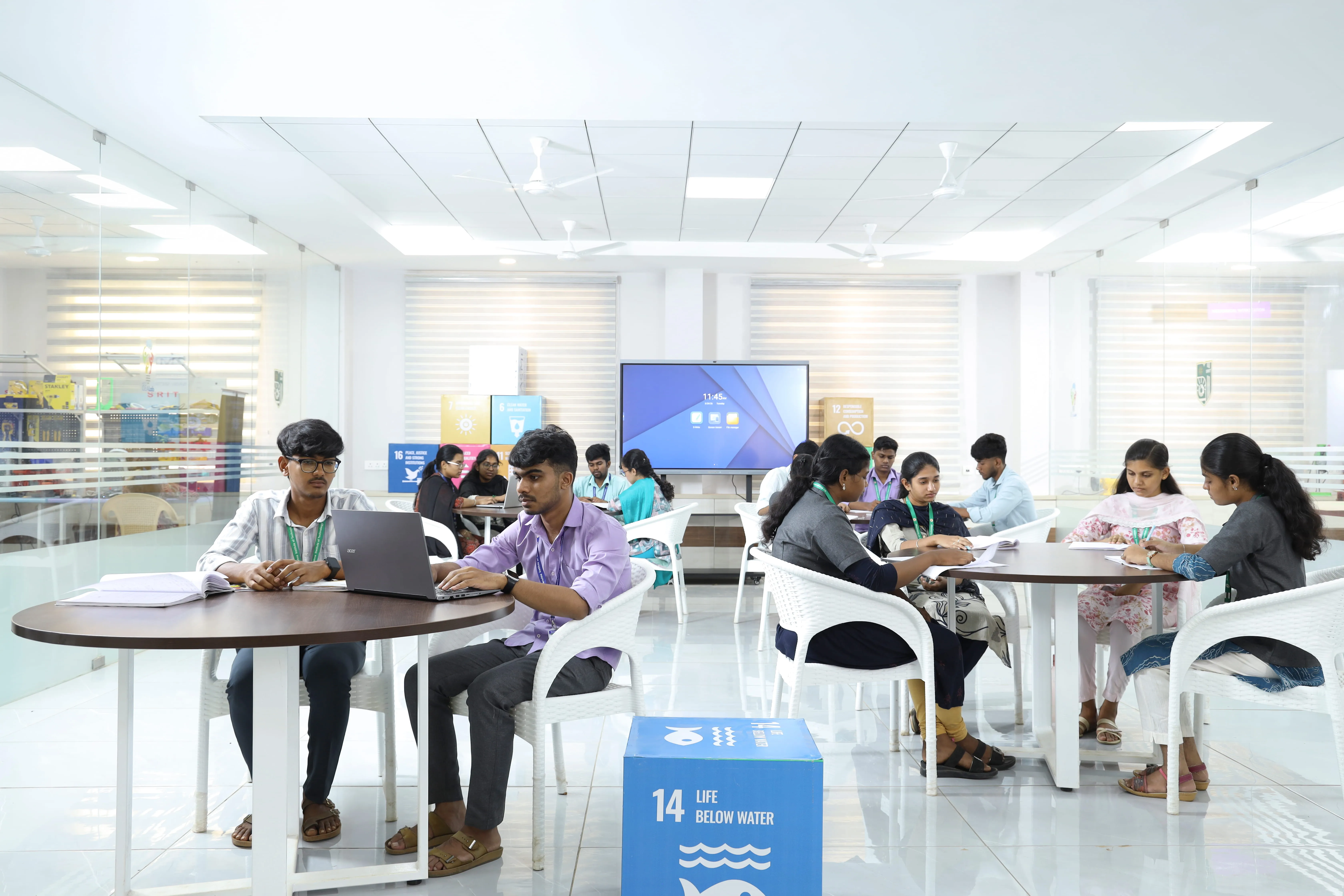
The department library serves as a valuable resource center for students and faculty, providing access to a wide collection of textbooks, reference books, journals, magazines, and digital learning resources. It supports academic excellence, research activities, and continuous learning by offering a conducive environment for study and knowledge enhancement.


.svg)



.svg)

.svg)



.webp)
The Department of Artificial Intelligence and Data Science is headed by Dr. K. N. Sivabalan. The department is committed to providing quality education while bridging the gap between academic learning and industry requirements through innovative teaching practices, industry collaborations, certification programs, workshops, and research activities. The department focuses on developing skilled professionals equipped to meet the challenges of the rapidly evolving fields of Artificial Intelligence and Data Science.

.webp)










.webp)



.svg)
.svg)
.svg)
.svg)
.svg)











.webp)
.svg)



.webp)