ABOUT DEPARTMENT

Information Technology

The Department of Information Technology was established in the academic year 2006-07. The programme is provisionally accredited by the National Board of Accreditation. The department is headed by Dr. J.J. Adri Jovin, who has more than 15 years of teaching experience. An IoT Laboratory was established with the assistance of Intel Corporation. The department has produced 10 university rank holders since commencement and achieved 100% placement in the academic year 2014-15.
Vision
To develop the department as a centre of excellence in Information Technology comparable with the best institutions in India by upgrading hardware, software and improving the quality of faculty.
Mission
To develop Quality IT professionals equipped with domain knowledge, analytical skills, creativity and high moral values for the advancement of technological excellence.
2006
Year Established
1
Courses Offered
4
Faculties with Ph.D
60
Students on Roll

Program Outcomes

Engineering Knowledge

Apply knowledge of mathematics, science and engineering fundamentals to solve complex engineering problems

Problem Analysis

Identify, formulate and analyse complex engineering problems using first principles

Design & Development

Design solutions for complex problems meeting specified needs with consideration for safety and society

Communication Skills

Communicate effectively on complex engineering activities with the engineering community and society

Ethics

Apply ethical principles and commit to professional ethics and norms of engineering practice

Life-long Learning

Engage in independent and life-long learning in the broadest context of technological change

Program Educational Objectives

PEO 1

Graduates who effectively demonstrate engineering knowledge and entrepreneurial skills by providing practical solutions in information technology.

PEO 2

Graduates who effectively demonstrate professionalism in multi-disciplinary engineering environment, leadership quality and teamwork.

PEO 3

Graduates who make contributions to knowledge and establish best engineering practice through research and development.

PEO 4

Graduates who demonstrate an ethical commitment to the community and the profession through involvement with professional organizations and society.

PEO 5

Graduates who engage in life-long learning as demonstrated through career advancement.

Program Outcomes

Engineering Knowledge

Apply the knowledge of mathematics, natural science, computing, and engineering fundamentals and an engineering specialisation to the solution of complex engineering problems.

Problem Analysis

Identify, formulate, and analyse complex engineering problems, reaching substantiated conclusions with consideration for the holistic nature of the problem.

Design & Development

Design creative solutions for complex engineering problems and design systems, components, or processes to meet identified needs — with consideration for public health and safety, and cultural, societal, and environmental factors. Sustainability is now intrinsic to design.

Conduct investigations of complex problems

Conduct investigations of complex engineering problems using research-based knowledge and research methods, including design of experiments, analysis and interpretation of data, and synthesis of information to provide valid conclusions.

Engineering Tool Usage

Create, select, and apply appropriate techniques, resources, and modern engineering and IT tools, including prediction and modelling — recognising their limitations — to solve complex engineering problems. (Previously titled "Modern Tool Usage.")

The Engineer and the World

Analyse and evaluate societal and environmental aspects while solving complex engineering problems, considering their impact on sustainability with reference to economy, health, safety, legal frameworks, culture, and the environment. This PO merges the old PO6 (Society) and old PO7 (Environment and Sustainability) into one.

Ethics

Apply ethical principles and commit to professional ethics, human values, diversity, and inclusion; and adhere to relevant national and international laws. (Diversity and inclusion are now explicit additions.)

Individual and Collaborative Team Work

Function effectively as an individual, and as a member or leader in diverse and multi-disciplinary teams.

Communication

Communicate effectively and inclusively within the engineering community and with society at large — comprehending and writing effective reports and design documentation, and making effective presentations — considering cultural, language, and learning differences.

Project Management and Finance

Apply knowledge and understanding of engineering management principles and economic decision-making, and apply these to one's own work, as a member and leader in a team, to manage projects in multi-disciplinary environments.

Life-Long Learning

Recognise the need for, and have the preparation and ability for, independent and life-long learning, adaptability to new and emerging technologies, and critical thinking in the broadest context of technological change.

Program Specific Outcomes

PSO 1

An ability to use and apply current technical concepts and practices in the core information technologies of human computer interaction, information management, programming, networking, and web systems and technologies.

PSO 2

An ability to assist in the creation of an effective project plan by applying the best practices and standards.
Infrastructure

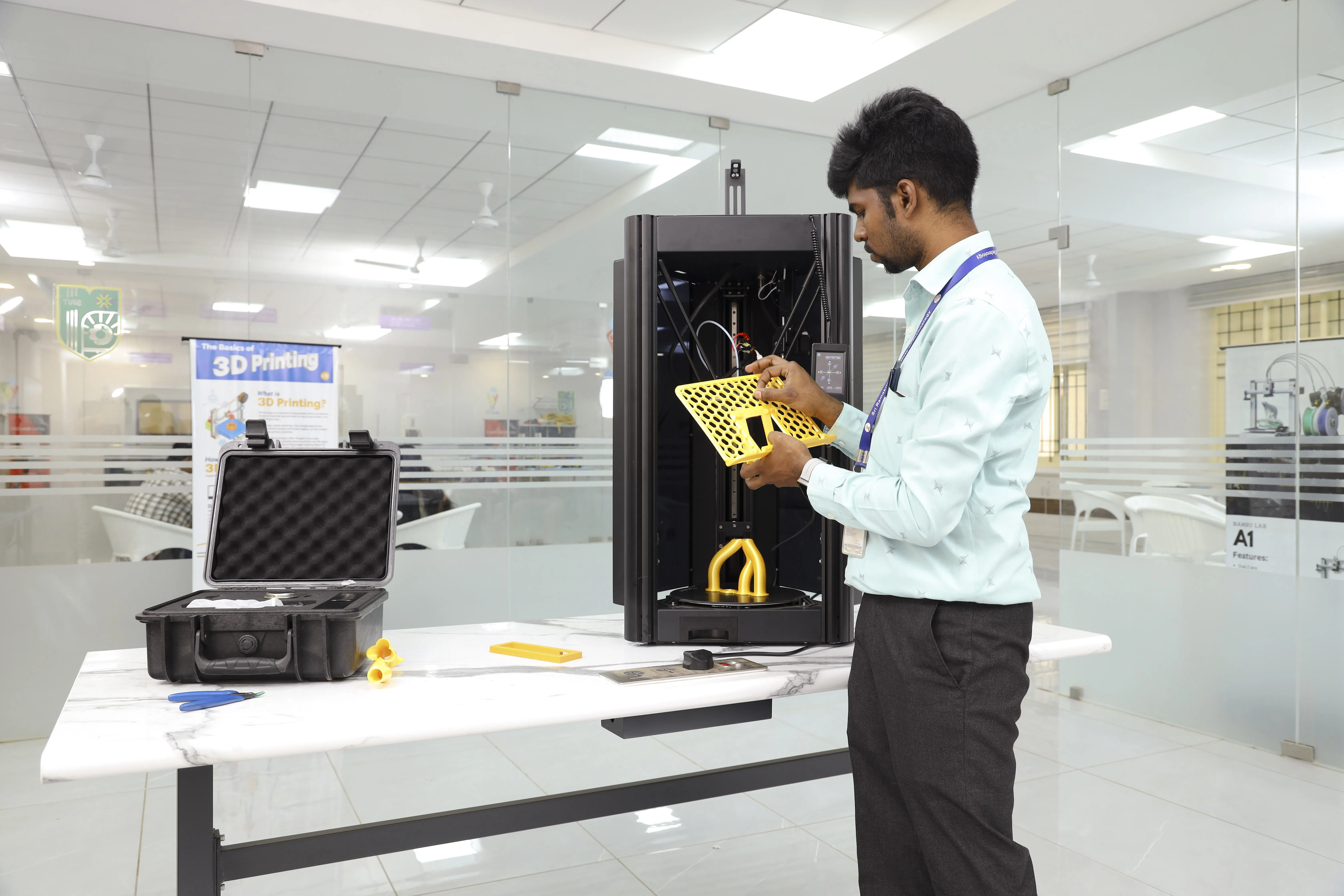
Technology-driven infrastructure powering the next generation of IT professionals

IT Lab & IoT Lab

IT Lab
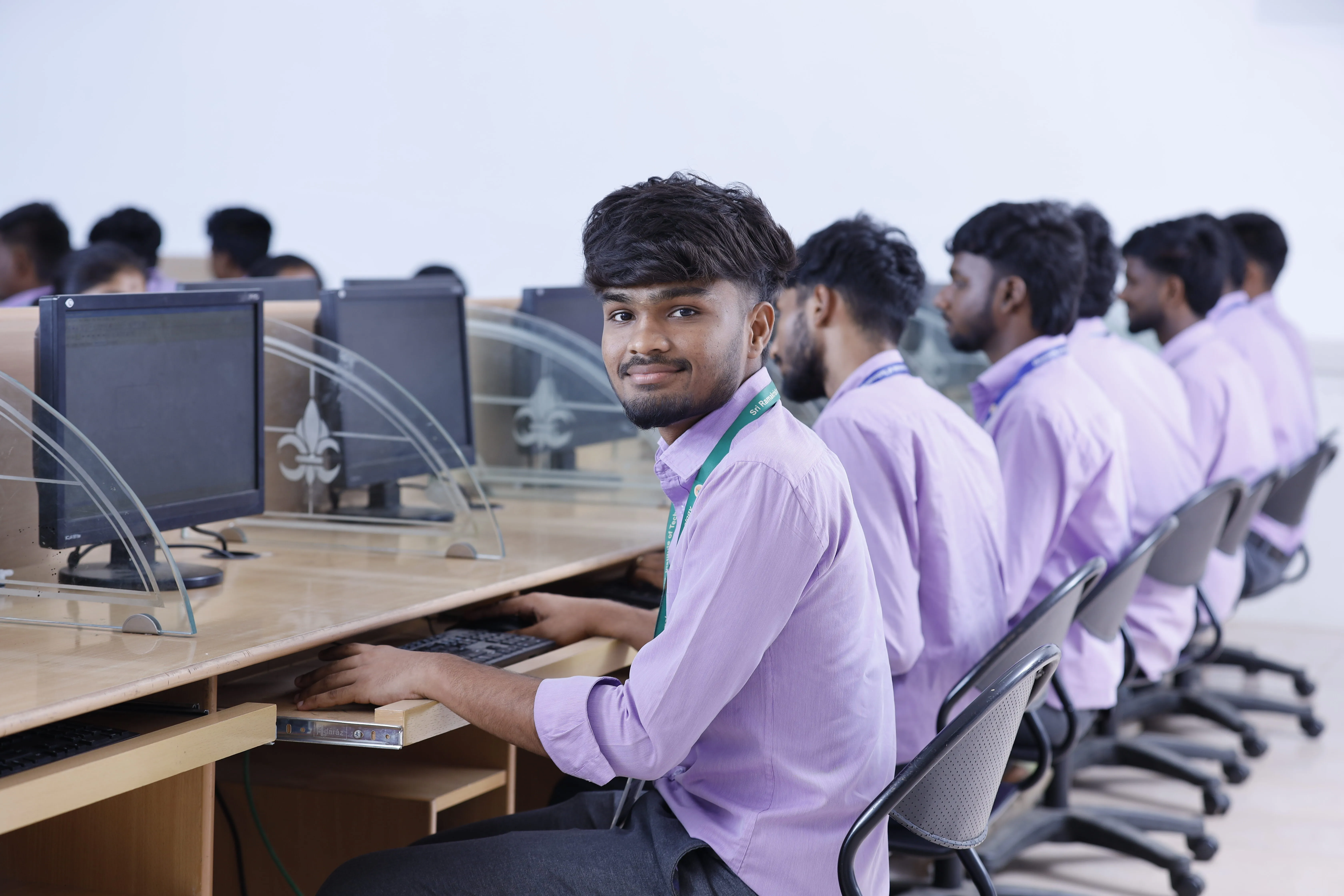
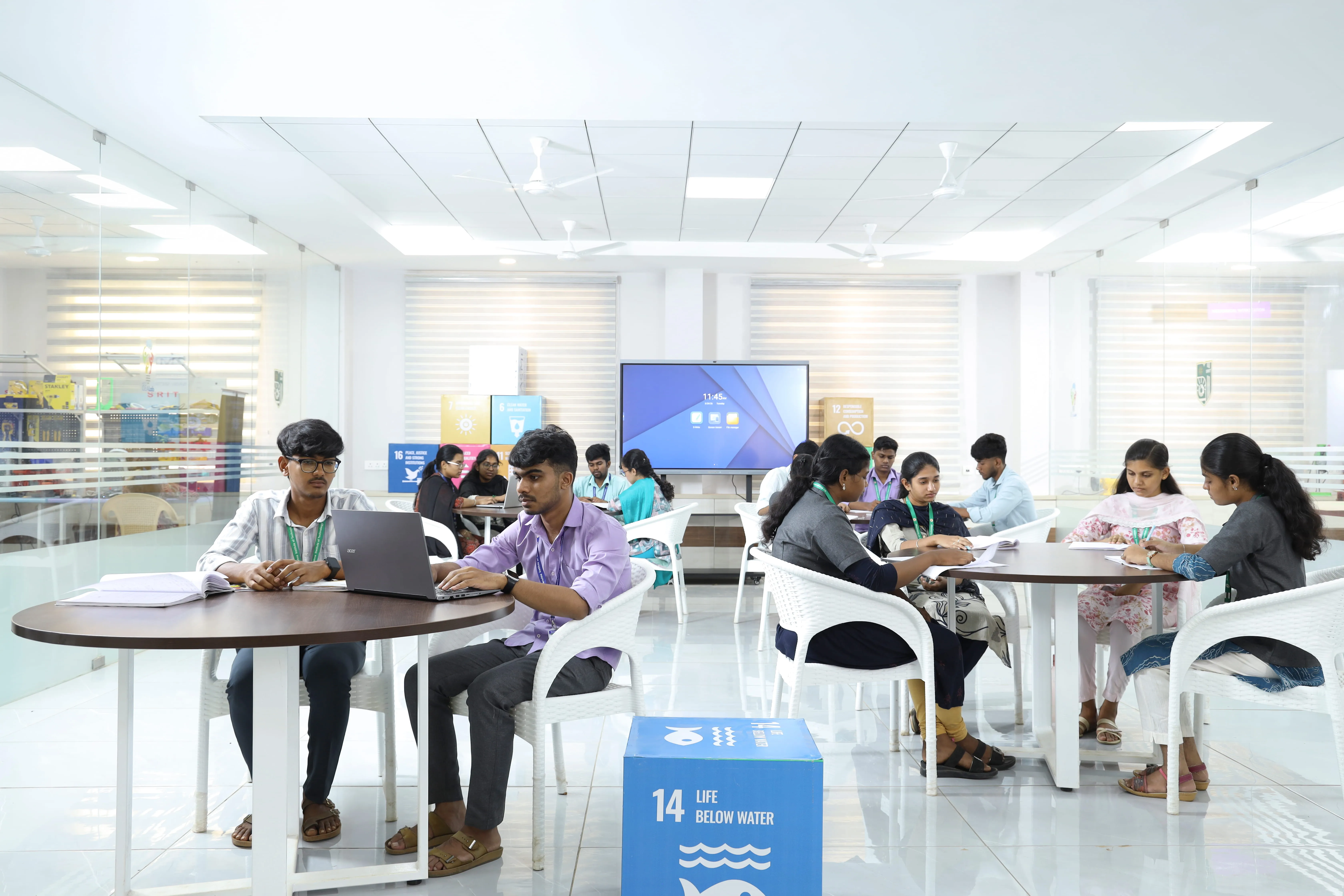
The IT Lab has 63 client systems, 1 server, 2 laser printers.
Application Software available in IT Lab:
Code Blocks, Oracle, XAMPP, Visual Studio Code, Python,NetBeans, CISCO Packet Tracer,
Star UML, Lex, Yacc, Python 3.6. Open Nebula.

IoT Lab :
The Intel-sponsored IoT Lab is equipped with 20 Intel Galileo Gen 2 Developer Board Kits
View All

Library

The department library has 341 books covering Networking, Microprocessor, Computer Architecture, Data Structures, Database Management Systems, Algorithms and programming languages including C, C++, Java, JavaScript and Visual Basic. Project reports of final year students are also stacked for reference.


View All

Research Cluster Detail

At SRIT, our Research Clusters promote interdisciplinary research, innovation, and collaboration to address real-world engineering and societal challenges. By bringing together faculty, researchers, students, and industry experts, we foster a culture of discovery, knowledge creation, and technological advancement.
With access to advanced laboratories, funded research projects, and industry partnerships, our research ecosystem empowers students and faculty to develop impactful solutions, publish quality research, and contribute to sustainable technological progress.
Read More
The world's most Top companies

Program Outcomes

Disciplinary Knowledge

Apply current technical concepts in human computer interaction, information management, programming and networking

Critical Thinking

Identify and formulate complex IT problems reaching substantiated conclusions using engineering principles

Information Literacy

Create effective project plans by applying best practices, standards and research-based methods

Communication Skills

Communicate effectively on complex IT activities with the engineering community and society

Professionalism

Demonstrate ethical commitment to the community and profession through involvement in professional organisations

Self-development

Engage in independent and lifelong learning in the broadest context of technological change

ABOUT HOD

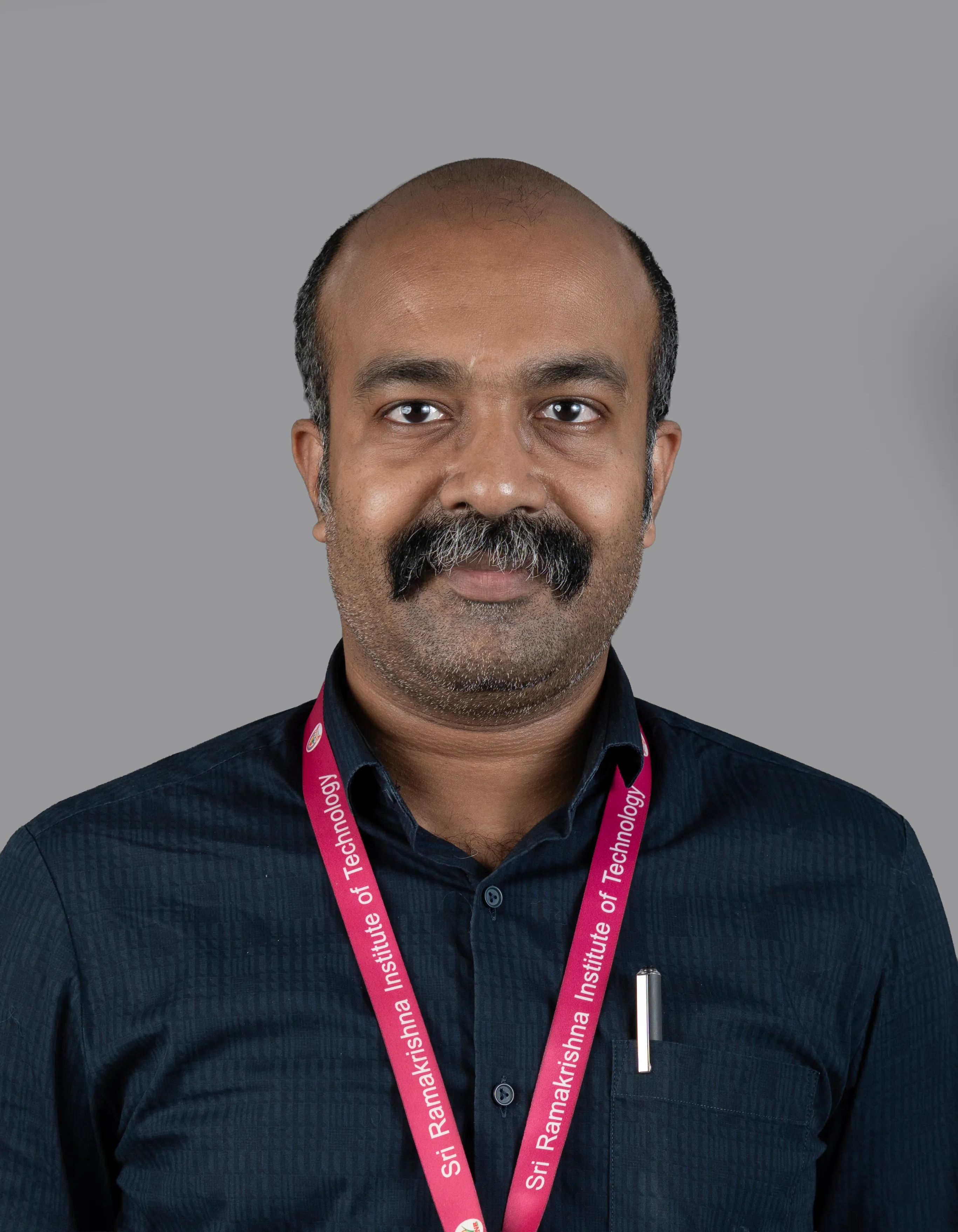
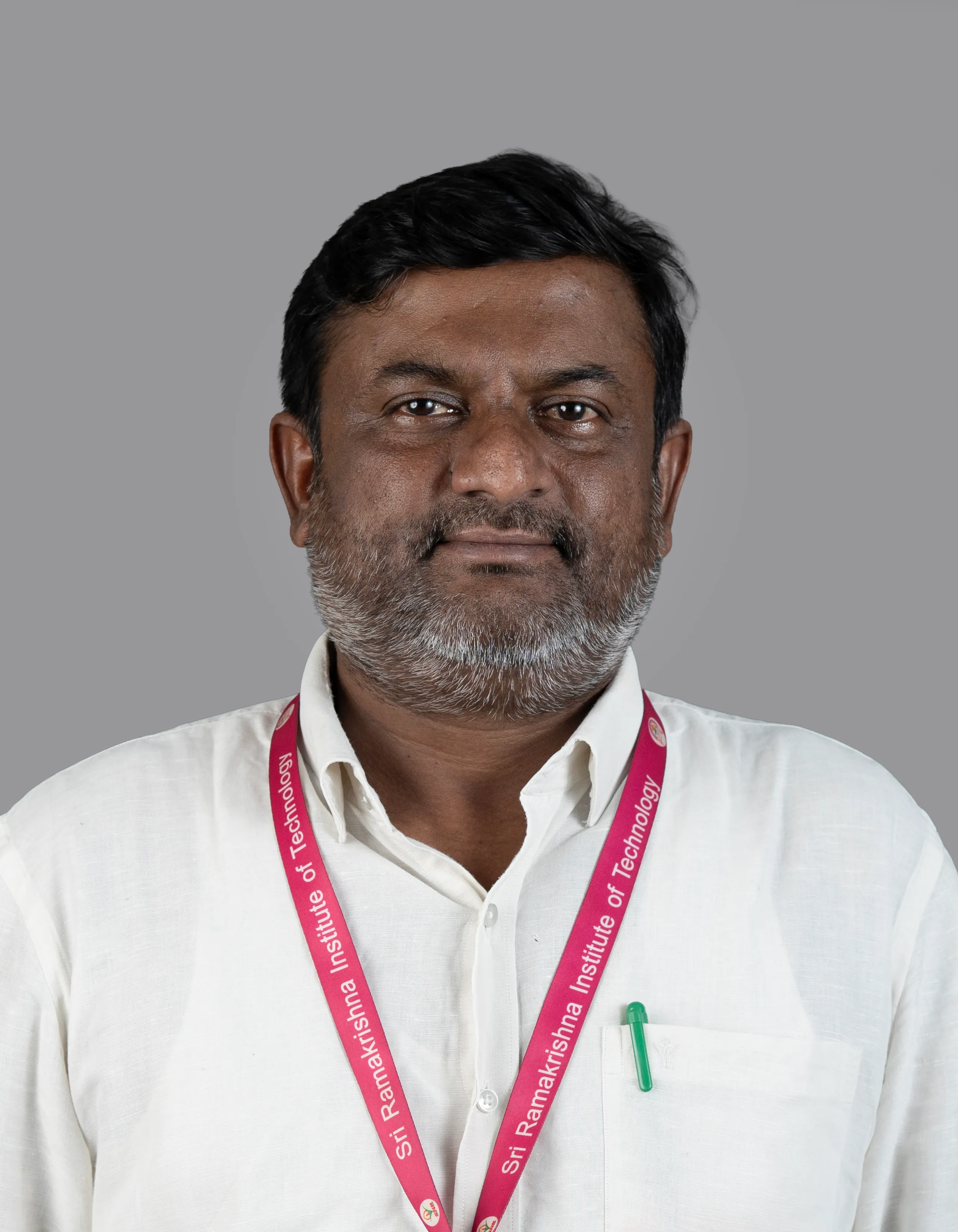
Dr. J.J. Adri Jovin

The department was formed with the primary objective of providing world class education
in Information Technology. Under Dr. J.J. Adri Jovin's leadership, the department bridges the
gap between campus education and industry needs through internships, guest lectures and
workshops.
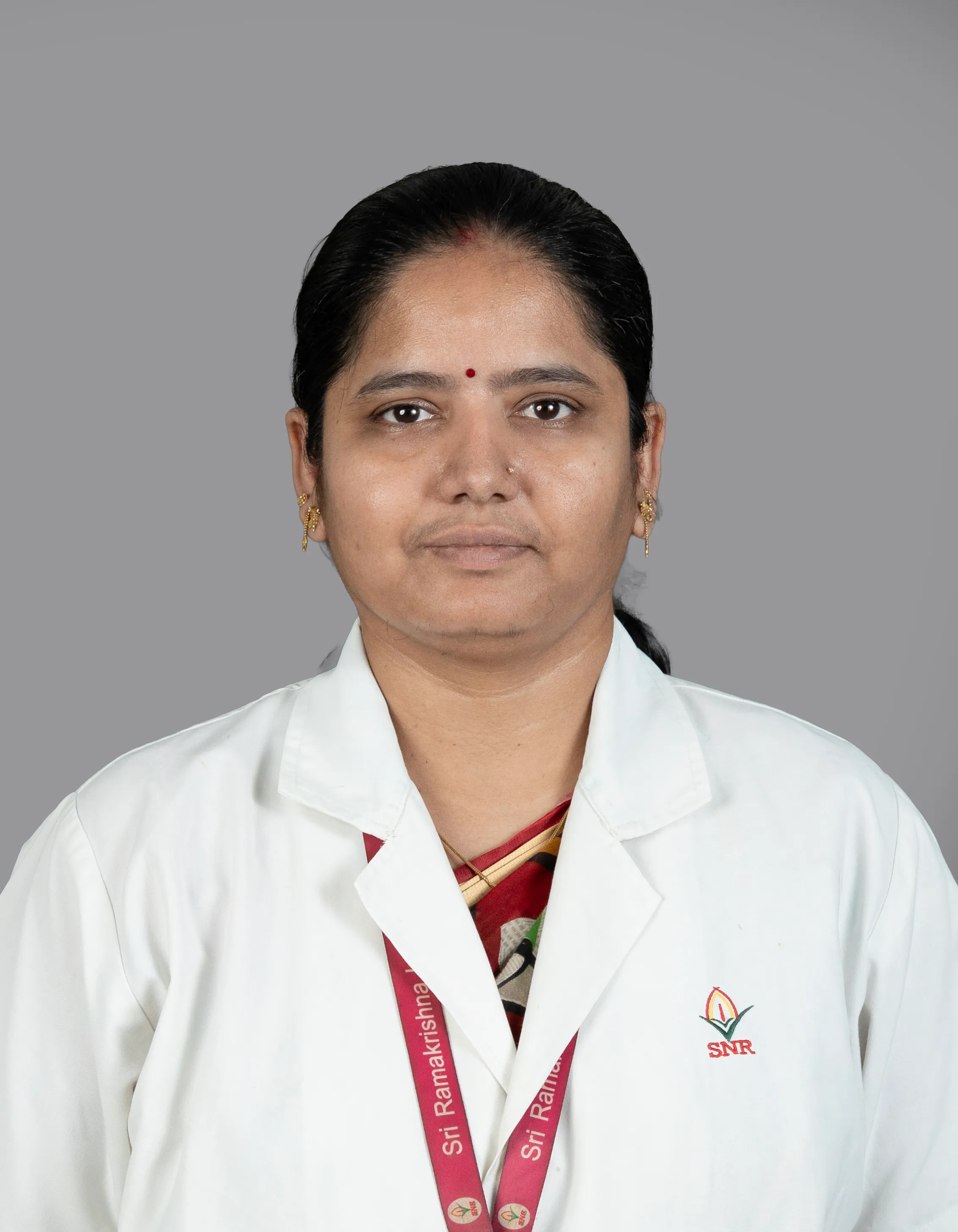
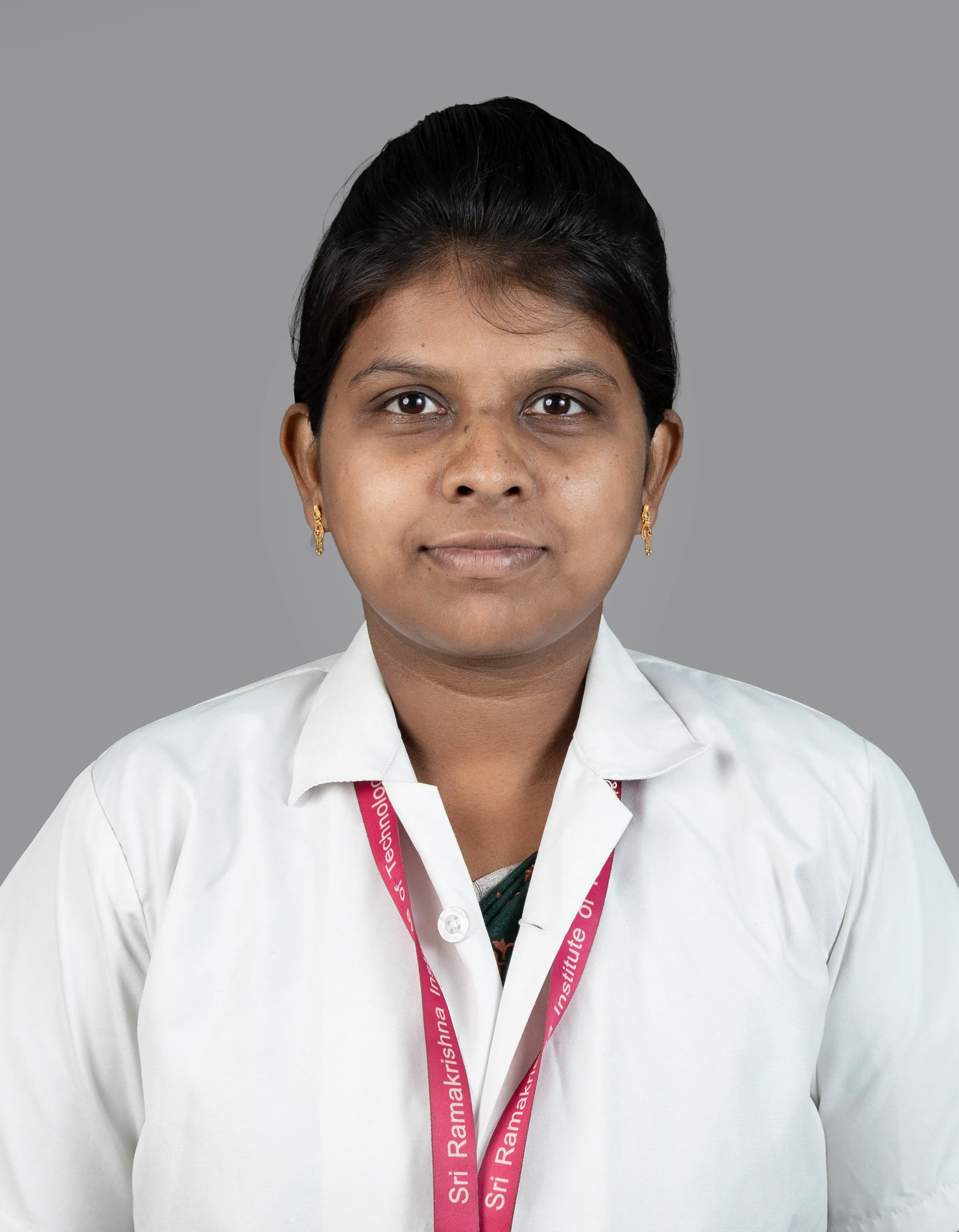
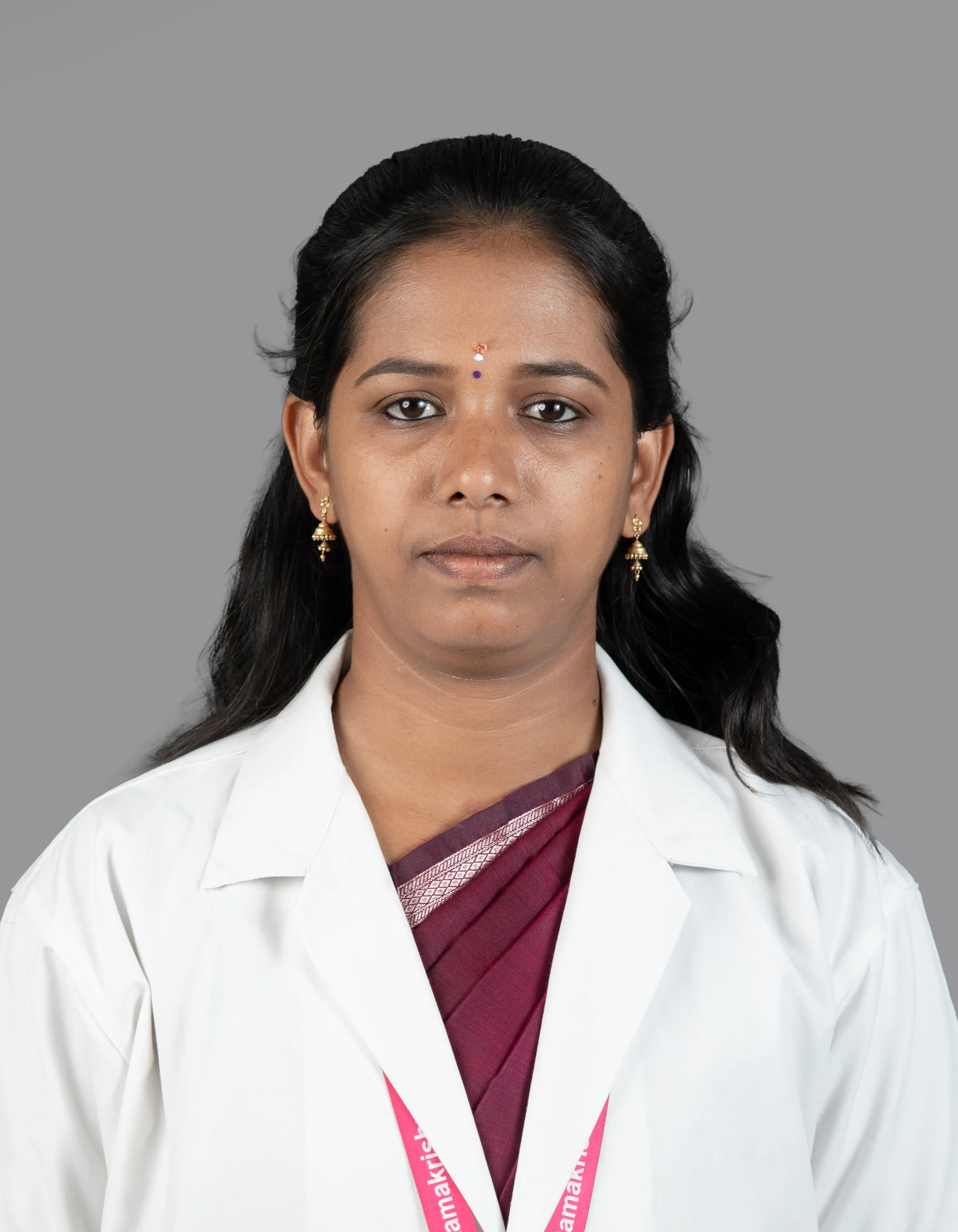
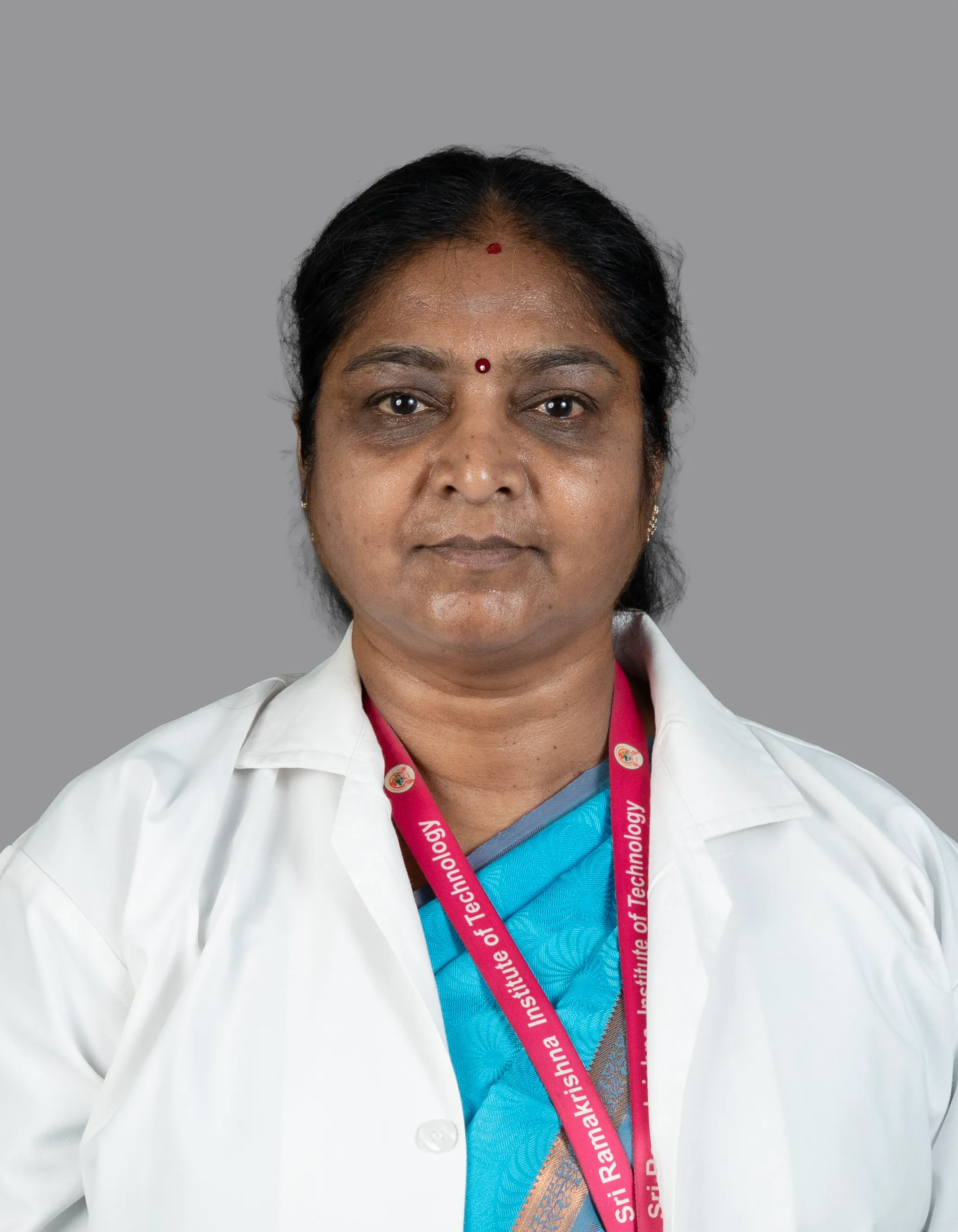
DEPARTMENT Faculty

Experienced faculty shaping future leaders

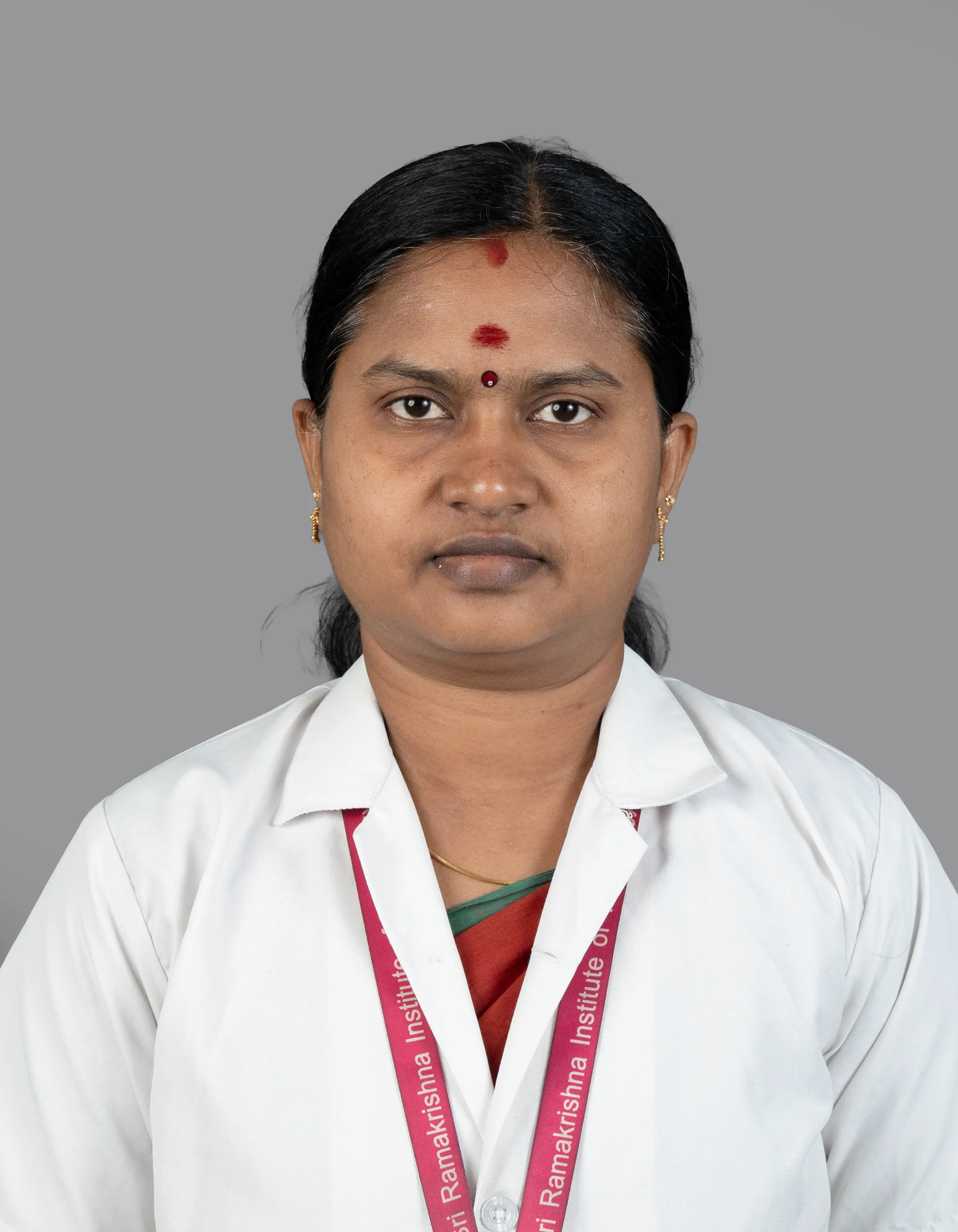
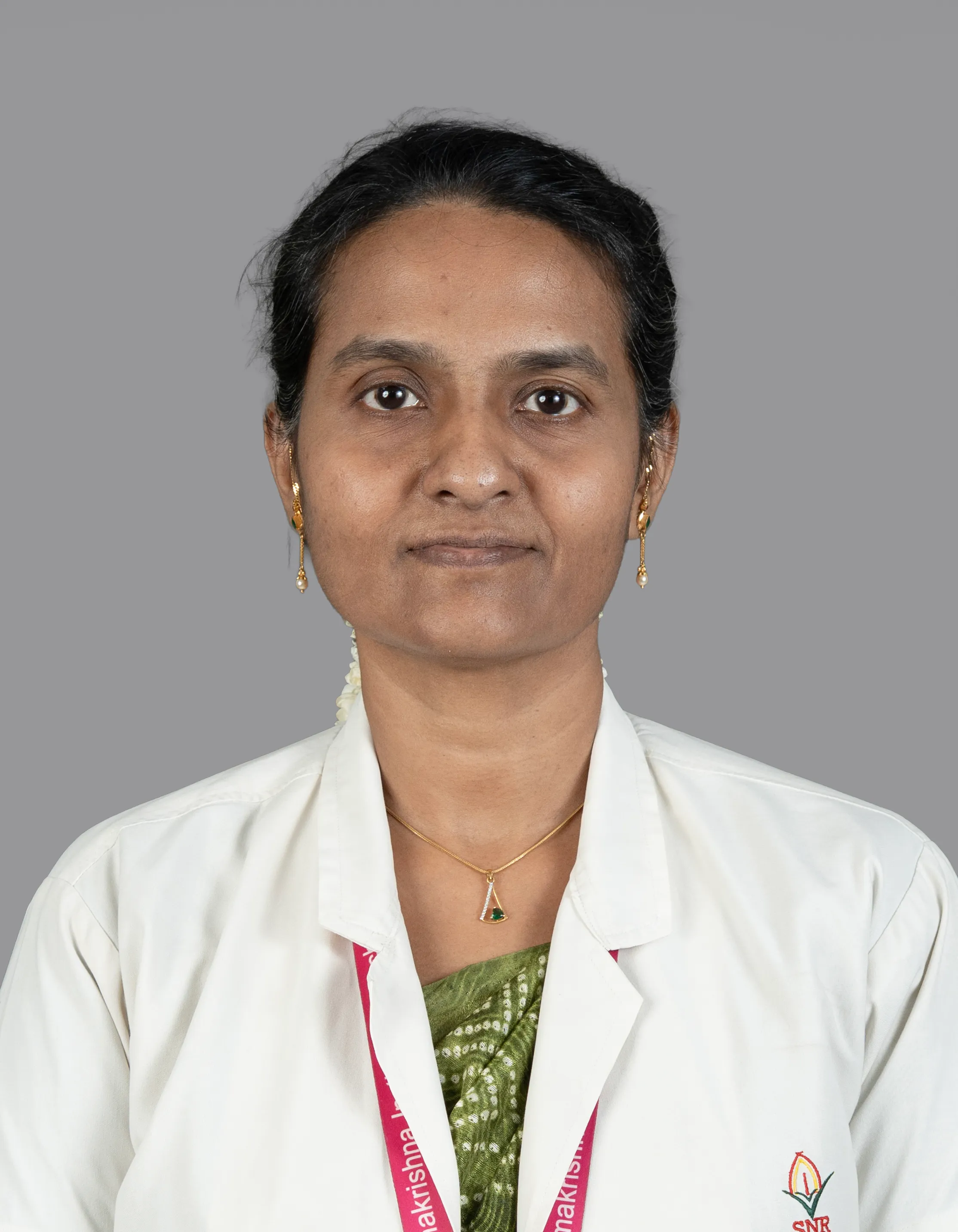
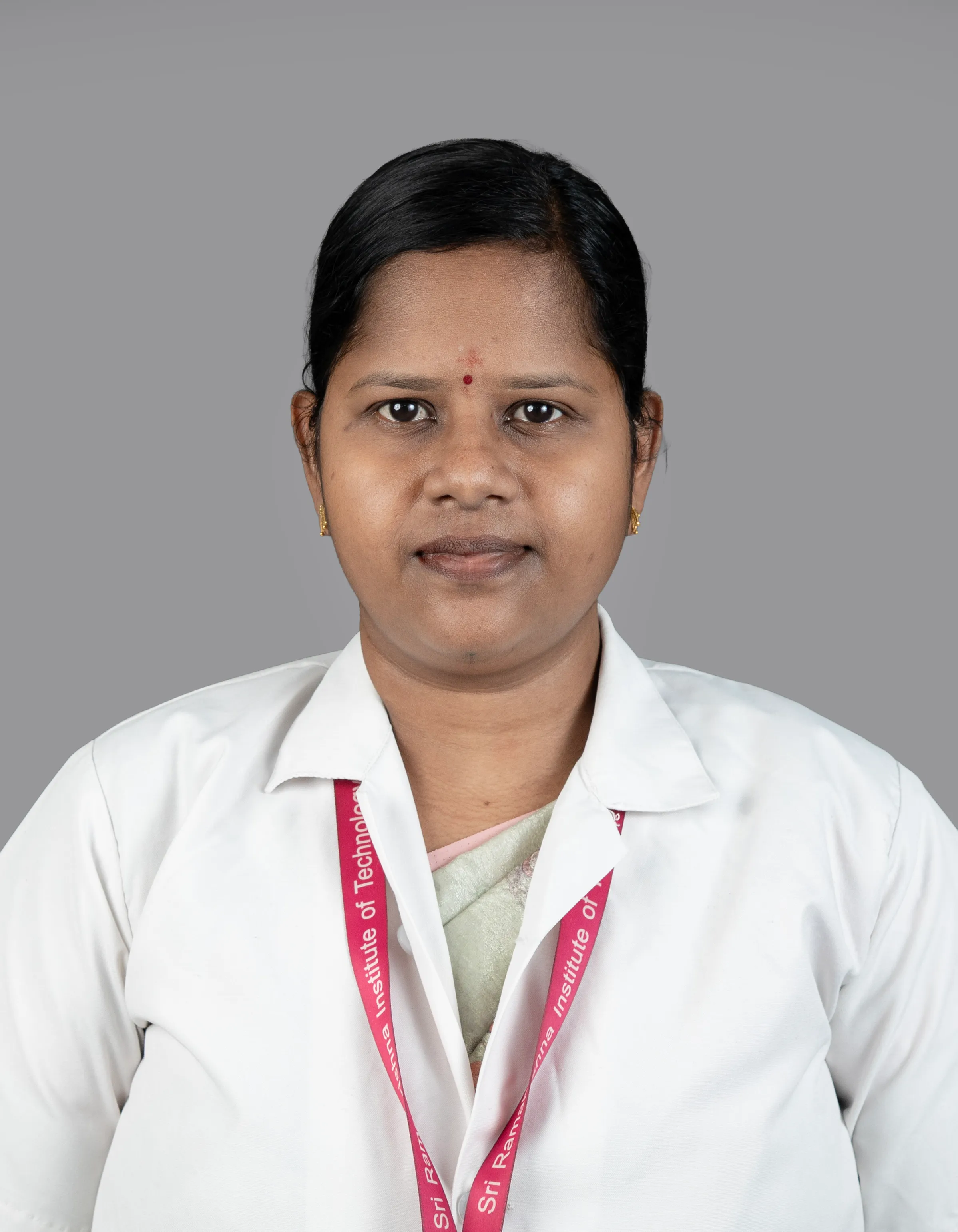
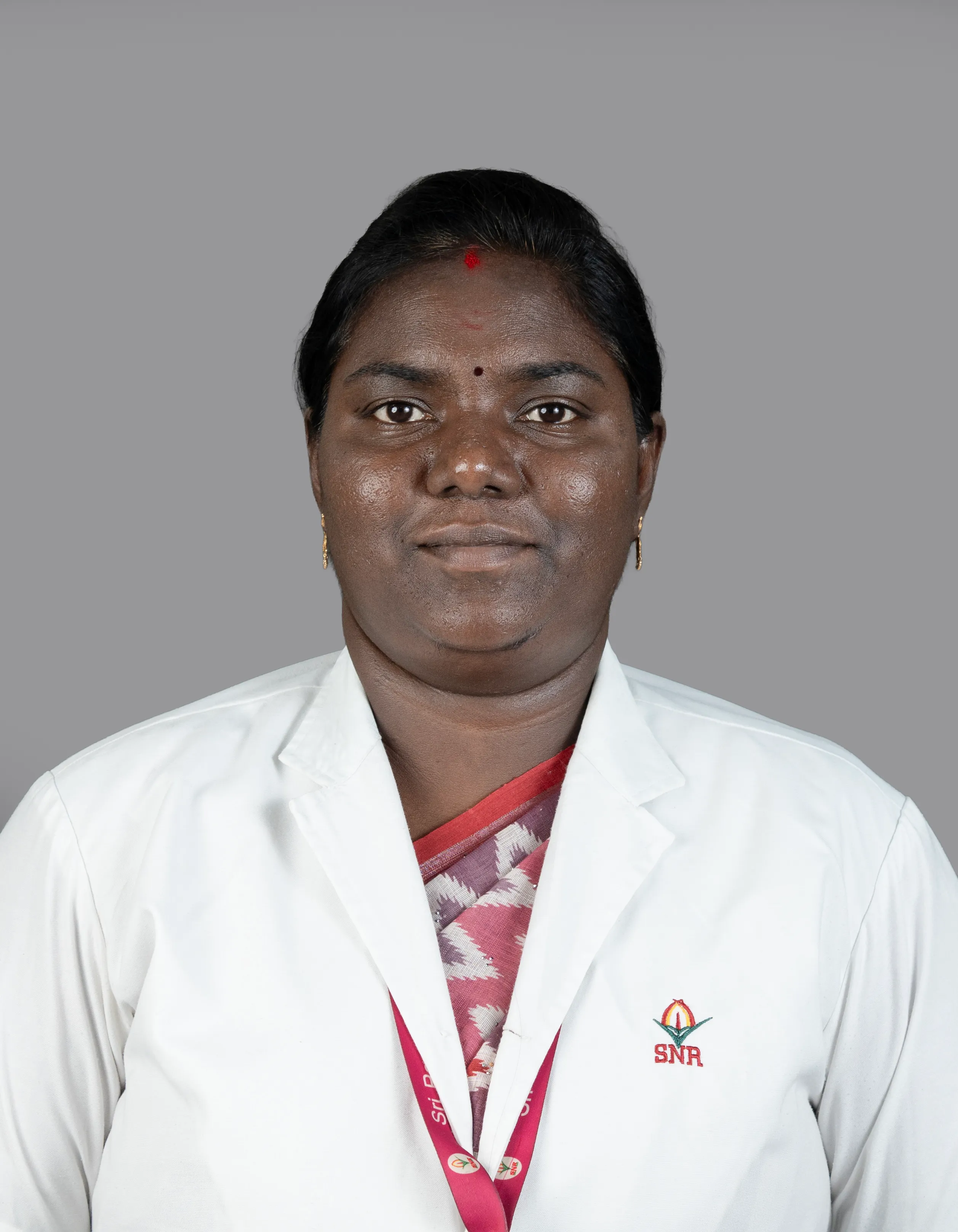
Dr. J J Adri Jovin
Professor and Head
Dr. M Senthamil Selvi
Professor
Dr. T C Ezhil Selvan
Associate Professor
Dr. J Mala
Associate Professor
Ms. S Natheldha Mary Navina
Assistant Professor (Sr. Gr.)
Mr. K Moorthy
Assistant Professor
Ms. U ELAKKIYA
Assistant Professor
Ms. K MOHANAPRIYA
Assistant Professor
Ms. K Malarvizhi
Assistant Professor
Ms. J SANGEETHA SARAL
Assistant Professor
Ms. S Amsaveni
Assistant Professor
Dr. J J Adri Jovin
Professor and Head
Dr. T C Ezhil Selvan
Associate Professor
Dr. J Mala
Assistant Professor (Sl. Gr.)
Ms. S Natheldha Mary Navina
Assistant Professor (Sr. Gr.)
Ms. K Malarvizhi
Assistant Professor
Mr. K Moorthy
Assistant Professor
Ms. K MOHANAPRIYA
Assistant Professor
Ms. J SANGEETHA SARAL
Assistant Professor
Ms. U ELAKKIYA
Assistant Professor
Ms. S Amsaveni
Assistant Professor
Dr. M Senthamil Selvi
Assistant Professor
View All

Center Of Excellence

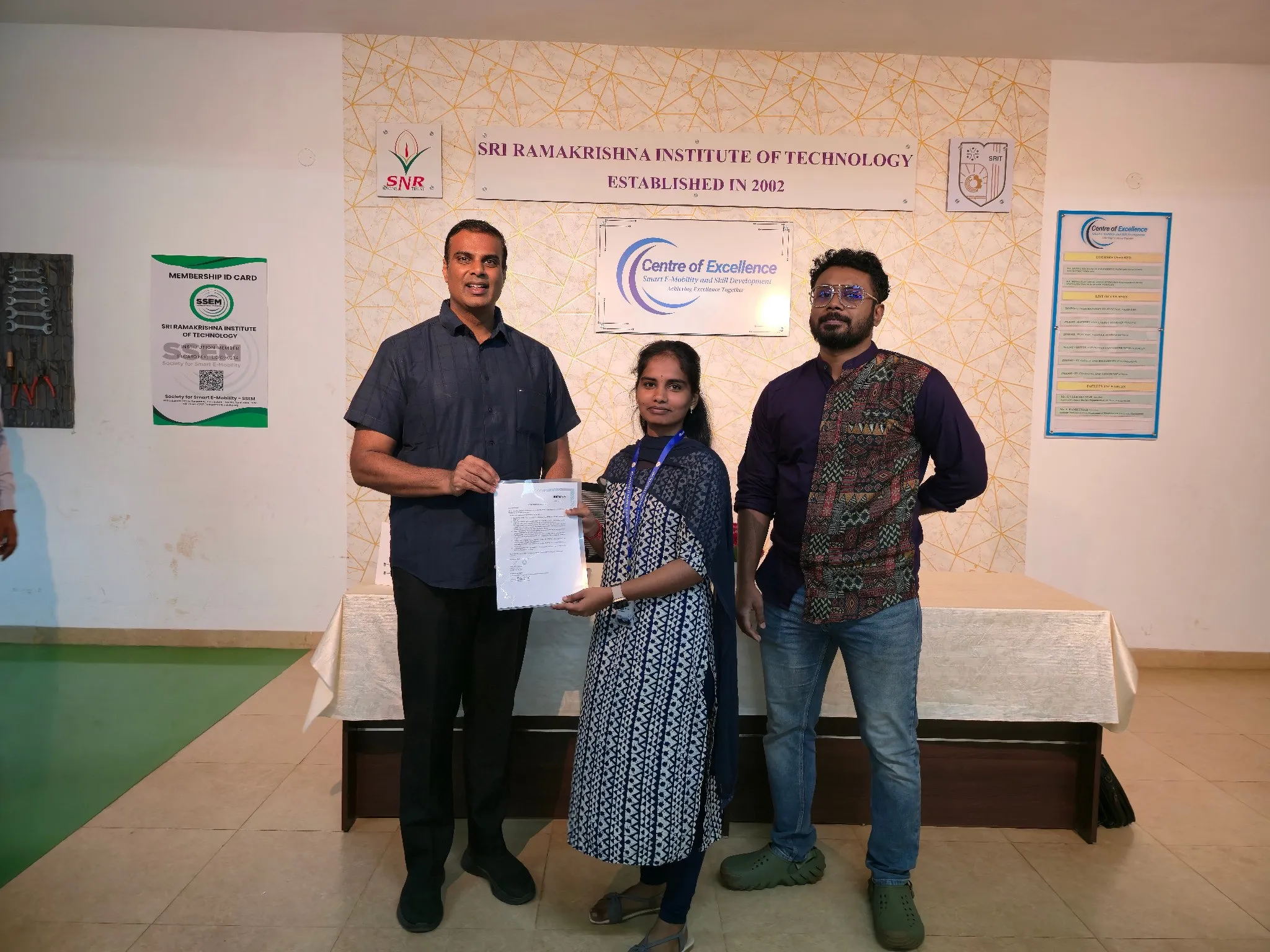
At Sri Ramakrishna Institute of Technology (SRIT), our Centers of Excellence bridge the gap between academic learning and industry expectations. Equipped with advanced technologies and developed in collaboration with leading industry partners, these centres provide students with hands-on training, research opportunities, innovation support, and real-world problem-solving experience.
Read More

Achievements and Activities

Lorem ipsum dolor sit amet, consectetur adipiscii pendisse varius enim
Explore More

Program Outcomes

Engineering Knowledge

Apply knowledge of mathematics, science and engineering fundamentals to solve complex engineering problems

Problem Analysis

Identify, formulate and analyse complex engineering problems using first principles

Design & Development

Design solutions for complex problems meeting specified needs with consideration for safety and society

Communication Skills

Communicate effectively on complex engineering activities with the engineering community and society

Ethics

Apply ethical principles and commit to professional ethics and norms of engineering practice

Life-long Learning

Engage in independent and life-long learning in the broadest context of technological change

EVENTS

Stay Updated with What's New at SRIT

Explore More
APR

15

World Art Day
Read More
Upcoming Event
APR

21

British National Tea Day  
Read More
September

22

A National Level Electric Bike Design Challenge (EBDC’26)
Read More
Upcoming Event
September

23

1st International Conference on Sustainable Electric Mobility (ICSEM'26)
Read More
Upcoming Event
Explore More

Achievements and Activities

Celebrating excellence across academics, sports, culture and innovation
Explore More
Explore More